


Understanding Autism Symbols: Meaning, History, and How They’re Used Today
FEATURED POSTS


September 11, 2026


Symbols help people communicate ideas quickly and create shared understanding. In the autism community, symbols have long been used to promote awareness, signal support, and encourage conversation. Over time, as understanding of autism has expanded through research, advocacy, and lived experience, the symbols used to represent autism have also evolved.
Today, there is no single image that represents every individual or family. Instead, a variety of symbols are used across schools, clinics, community organizations, and digital spaces. Exploring autism symbol history helps provide context for why different images exist and how they are used today across different settings.
This blog explores the history of autism symbols, the most commonly used imagery today, and best practices for choosing symbols that reflect dignity, inclusion, and respect for individuals with autism and their families.
A Brief History of Autism Symbols
The use of symbols to represent autism developed alongside early public awareness efforts. In the mid-20th century, autism was not widely understood, and outreach focused primarily on education and recognition. During this period, symbols were often used to introduce the public to autism and provide a visual reference point for learning and discussion.
As research advanced and diagnostic criteria became more clearly defined, autism awareness expanded beyond clinical settings. Symbols began appearing in educational materials, fundraising campaigns, and community events. Over time, these visuals became familiar to families, educators, and service providers and played a role in shaping early autism education efforts.
Understanding autism symbol history means recognizing that these images reflect the knowledge, language, and priorities of the time in which they were created. As conversations around autism have continued to grow and change, new symbols and designs have emerged to reflect evolving perspectives on inclusion, accessibility, and quality of life.
A Widely Recognized Autism Awareness Symbol
The puzzle piece is one of the earliest and most widely recognized symbols associated with autism. First introduced in the 1960s, it became closely associated with early autism education and public awareness efforts at a time when understanding of autism was still emerging.
Over the decades, the puzzle piece appeared in informational materials, advocacy campaigns, and community programs, becoming a familiar autism awareness symbol for many families, educators, and service providers. For some, it represents early recognition and the growth of autism-related resources and services.
Today, the puzzle piece continues to appear in certain contexts, often paired with language that emphasizes respect, support, and inclusion. As with any symbol, its meaning is shaped by how it is used, the audience it serves, and the values communicated alongside it.
Key considerations when using autism symbols include:
- Familiarity: Some imagery is widely recognized and easy to identify
- Audience: Interpretation may vary depending on community and setting
- Intent: Symbols are most effective when paired with respectful, person-centered language
Common Autism Symbols Used Today
In addition to historically recognized imagery, many other symbols are commonly used to represent autism and the autism spectrum. These designs often emphasize individuality, diversity, and connection.
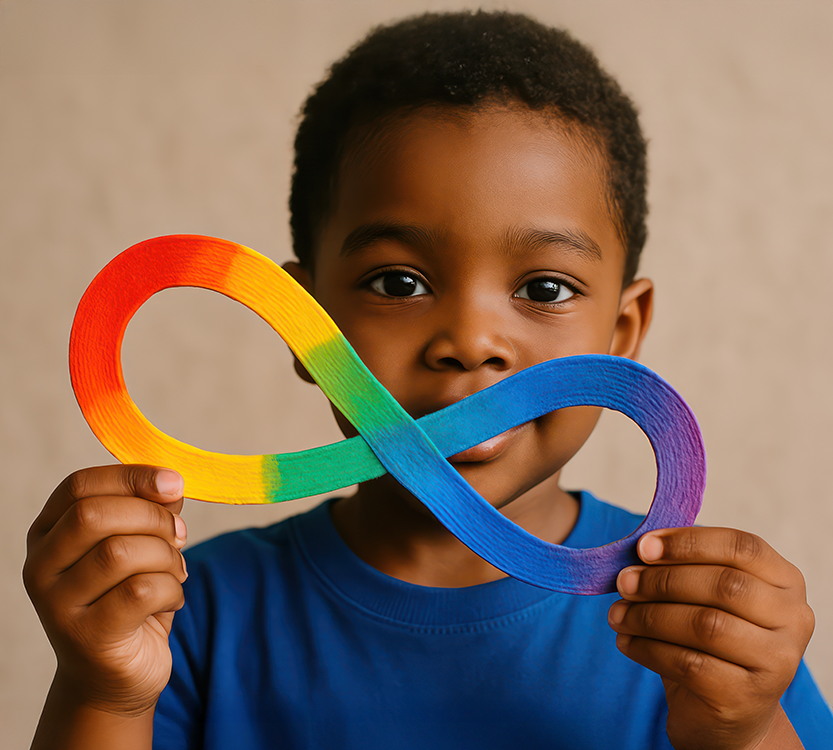
Rainbow Infinity Symbol
The rainbow infinity symbol is frequently used to represent the wide range of experiences across the autism spectrum. Its continuous shape reflects lifelong identity, while its colors highlight diversity and individuality.
Gold (“Au”) Imagery
Gold imagery, based on the chemical symbol “Au,” is often used in autism-related visibility efforts. Gold themes may appear in ribbons, pins, graphics, and educational materials and are commonly associated with recognition and community connection.
Spectrum-Inspired Designs
Abstract spectrum designs use gradients, flowing shapes, or geometric patterns to reflect variation and uniqueness. These visuals are often used in digital platforms and educational resources.
Heart and Community Motifs
Heart symbols and community-focused imagery are commonly used to express care, support, and connection. These designs highlight relationships and shared understanding.
There is no single official autism awareness symbol. Many organizations and families choose imagery that aligns with their values, audience, and goals.
Why Autism Symbols Matter
Symbols influence how messages are received and understood. In autism-related education and outreach, they can help promote awareness, encourage conversation, and signal support.
Autism symbols are frequently used during awareness and recognition efforts—particularly in April—across social media, schools, clinics, workplaces, and community events. When an autism awareness symbol is paired with clear explanations and meaningful actions, it can reinforce messages of respect, accessibility, and inclusion.
Symbols are most impactful when they are supported by inclusive practices and real-world efforts to support individuals with autism and their families.
Best Practices for Using Autism Symbols
Choosing autism symbols thoughtfully helps ensure they communicate the intended message clearly and respectfully.
Engage Individuals with Autism and Families
Including individuals with autism and family members in discussions about imagery provides valuable insight and helps ensure materials are relevant and respectful.
Clarify Your Purpose
Determine whether your goal is education, awareness, or community support. Your purpose should guide symbol selection and messaging.
Use Respectful, Strengths-Based Language
Symbols should be paired with language that emphasizes dignity, strengths, and access to support rather than focusing on limitations.
Design for Accessibility
Ensure materials are accessible by using high-contrast colors, readable fonts, alt text for images, captions for videos, and clear layouts.
Pair Symbols with Action
Imagery should be connected to tangible efforts such as training, accommodations, educational resources, or partnerships.
Adapt to the Setting
Different environments—schools, clinics, workplaces, and digital platforms—may require different approaches to imagery and messaging.
Using Autism Symbols in Schools, Clinics, and Workplaces
Symbols are most effective when they are part of broader efforts to support understanding and inclusion.
Schools
Schools can introduce symbols alongside age-appropriate explanations and pair them with inclusive teaching strategies, sensory-friendly options, and staff training.
Clinics
In clinical settings, autism symbols should align with respectful, family-centered care. Imagery can help create welcoming environments and support clear communication about services.
Workplaces
In workplaces, symbols can signal inclusive values when paired with flexible policies, clear communication practices, and accessibility accommodations.
Across all settings, explaining what a symbol represents and how it connects to meaningful support helps reinforce trust.
Language and Imagery: Supporting Respectful Representation
Symbols are only one part of how autism is represented. Language and visuals together shape understanding. Thoughtful wording helps ensure messages reflect dignity, autonomy, and respect.
- Center lived experience by including perspectives from individuals with autism
- Be specific when describing supports and accommodations
- Avoid stereotypes or fear-based narratives
- Invite ongoing feedback from families and the autism community
Frequently Asked Questions About Autism Symbols
Is there one official autism awareness symbol?
No. Multiple symbols are used today, and choice often depends on audience, setting, and purpose.
Why do different organizations use different symbols?
Symbol selection reflects organizational values, goals, and the communities being served.
What colors are commonly used in autism symbols?
Rainbow palettes emphasize diversity, gold imagery is commonly used in awareness efforts, and high-contrast designs support accessibility.
Can symbols be combined?
Yes. Combining design elements can help personalize materials while remaining inclusive and clear.
How can symbols support inclusion beyond awareness?
When paired with education, accessibility, and supportive practices, symbols help promote understanding and meaningful inclusion.
Key Takeaways
- Autism symbol history reflects evolving understanding, advocacy, and community perspectives
- Multiple autism symbols are used today, each with historical and contextual significance
- Symbols are most effective when paired with respectful language and authentic support
- Accessibility and community input should guide imagery choices
- True inclusion is reflected in action, not just visibility
By choosing autism symbols thoughtfully, society can communicate dignity, belonging, and meaningful support for individuals with autism and their families.
Looking for support that goes beyond awareness? At LEARN, we believe inclusion is reflected in the care, partnership, and progress we build with families every day. Learn more about our compassionate autism care and how we support children and families across our communities by visiting our website.